16 exercises on Mindful breathing
There is a sitting mediation manual for practitioners of all levels (Beginners, Intermediate, Advanced) that presents 16 exercises of mindful breathing. This text is called Ananpanasati Sutra and was spoken by the Buddha around 2600 years ago.
Today it is still a key root text for the same purpose: Sitting meditation instructions. If we understand and are able to practice the instructions in the Sutra, we will have a very solid foundation for our spiritual practice, certainly for Plum Village- practice.
2026-05 Course on the 16 exercises
In May 2026 I had the opportunity to offer a course of three days on this sacred and most useful text. I offered the course in order to explain to beginners as well as to more advanced practitioners how to understand and apply the 16 exercises in sitting meditation and in daily life.
We had five sessions with talks May 7th to May 10th.
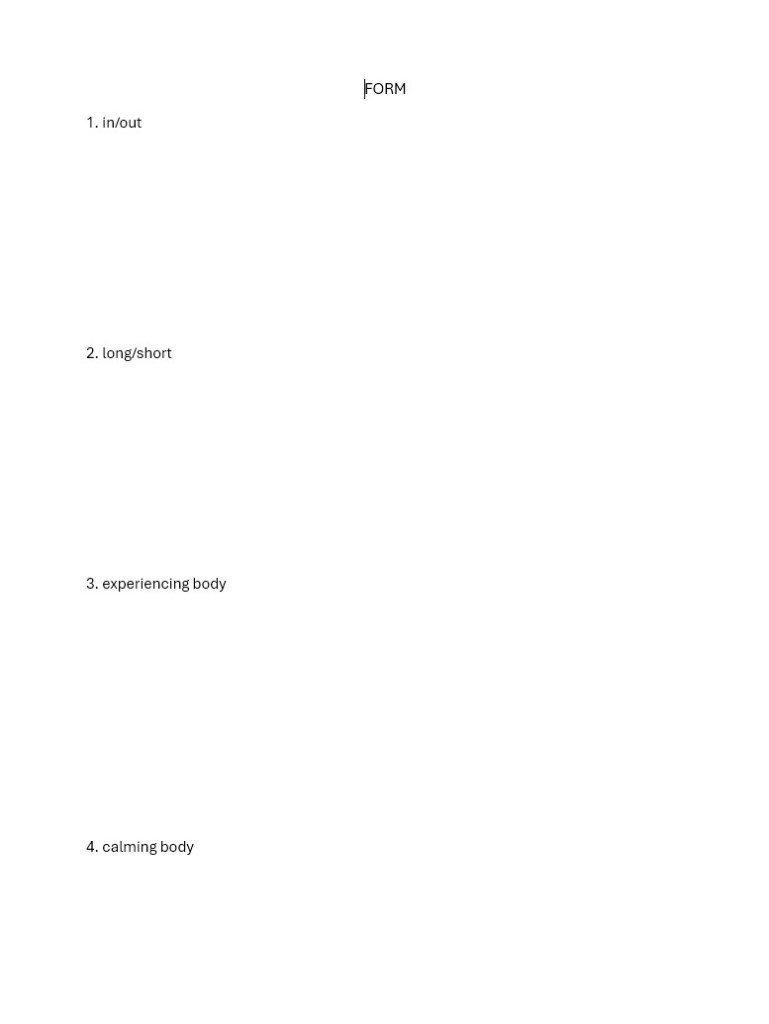
=> Here is a sheet you can use for making notes on the 16 exercises. Click on it for download .docx.
To download a recording, first click play, then later click on the three dots to the right of the player.
Session 1: Introduction and exercises 1, 2
‘Breathing in, I know I am breathing in. Breathing out, I know I am breathing out.’
‚Breathing in, I follow the whole lenght of my in- breath. I measure my breath from the beginning to the end.‚
Session 2: Context of the teaching of the Buddha and exercises 3, 4
3. ‘Breathing in, I am aware of my whole body. Breathing out, I am aware of my whole body.’ He or she practices like this.
4. ‘Breathing in, I calm my whole body. Breathing out, I calm my whole body.’ He or she practices like this.‚
Session 3: Exercises 5, 6
5. ‘Breathing in, I feel joyful. Breathing out, I feel joyful.’ He or she practices like this.
6. ‘Breathing in, I feel happy. Breathing out, I feel happy.’ He or she practices like this.





Session 4: Exercises 7, 8, 9, 10, 11, 12
8. ‘Breathing in, I calm my mental formations. Breathing out, I calm my mental formations.’ He or she practices like this.
9. ‘Breathing in, I am aware of my mind. Breathing out, I am aware of my mind.’ He or she practices like this.
10. ‘Breathing in, I make my mind happy. Breathing out, I make my mind happy.’ He or she practices like this.
11. ‘Breathing in, I concentrate my mind. Breathing out, I concentrate my mind.’ He or she practices like this.
12. ‘Breathing in, I liberate my mind. Breathing out, I liberate my mind.’ He or she practices like this.
Click for: Useful when looking at the mind
Desiring – Not desiring
Hating – Not Hating
In a state of ignorance – Not in a state of ignorance
Collected (gesammelt) – Distracted (zerstreut, abwesend)
Wide in scope (Ausdehnung) – Narrow in scope
Composed (gelassen, gefasst) – Not composed
Capable of reaching a higher state – Not capable of reaching a higher state
Free – Not free
Session 5: Application of the practice , Exercises: 13, 14, 15, 16
13. ‘Breathing in, I observe the impermanent nature of all dharmas. Breathing out, I observe the impermanent nature of all dharmas.’ He or she practices like this.
14. ‘Breathing in, I observe the disappearance of desire. Breathing out, I observe the disappearance of desire.’ He or she practices like this.
15. ‘Breathing in, I observe the no-birth, no-death nature of all phenomena. Breathing out, I observe the no-birth, no-death nature of all phenomena.’ He or she practices like this.
16. ‘Breathing in, I observe letting go. Breathing out, I observe letting go.’ He or she practices like this.
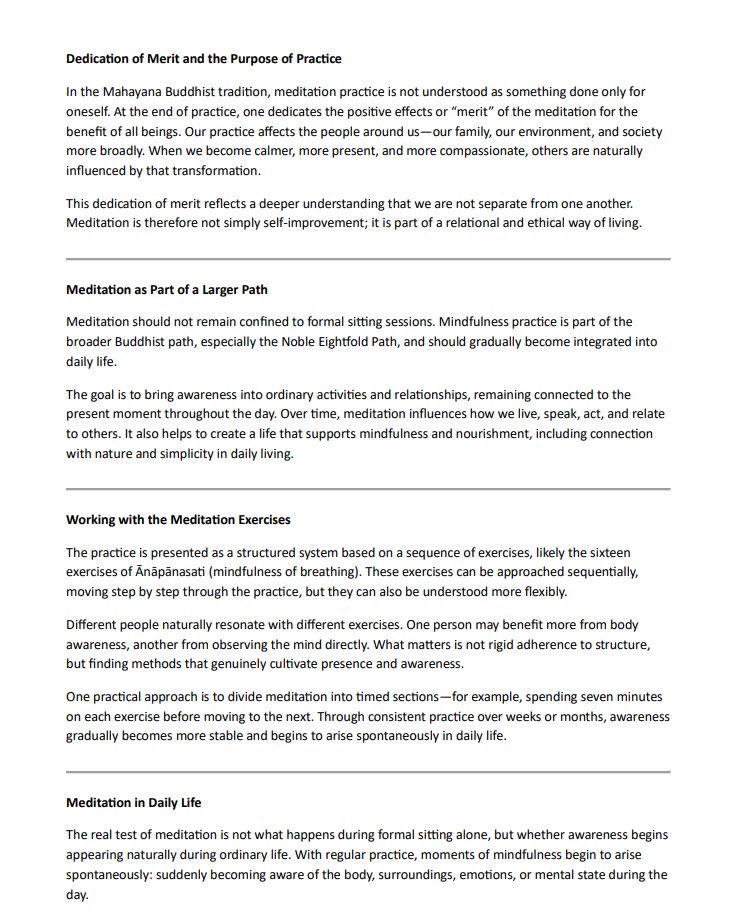
Here is a summary of session 5. We have no audio, because the recording was not good enough.
Download (.pdf):
Thank you, dear friends, the course is over here.
If you wonder where to continue your study, I recommend:
These videos
„Living Gems“ : need to register, and for some of the videos will need to click on English subtitles on the top right.
https://plumvillage.org/gems/event/Kinh-Quan-Niem-Hoi-Tho-Hoi-Tho-1-Toi-7-BVJctnwsHA5guH9zYdNM9V
https://plumvillage.org/gems/event/Kinh-Quan-Niem-Hoi-Tho-Hoi-Tho-1-Toi-7-BVJctnwsHA5guH9zYdNM9V
https://plumvillage.org/gems/event/What-is-Right-View-kjK5eEQWJc4KZ7by62Lo9R?start=317
These books
On the 16 exercises: https://www.parallax.org/product/the-path-of-emancipation/
„Understanding our Mind “ – book , which is very extensive, detailled : https://www.parallax.org/product/understanding-our-mind/
Regarding exercises 13-16: https://www.parallax.org/product/the-other-shore/

